
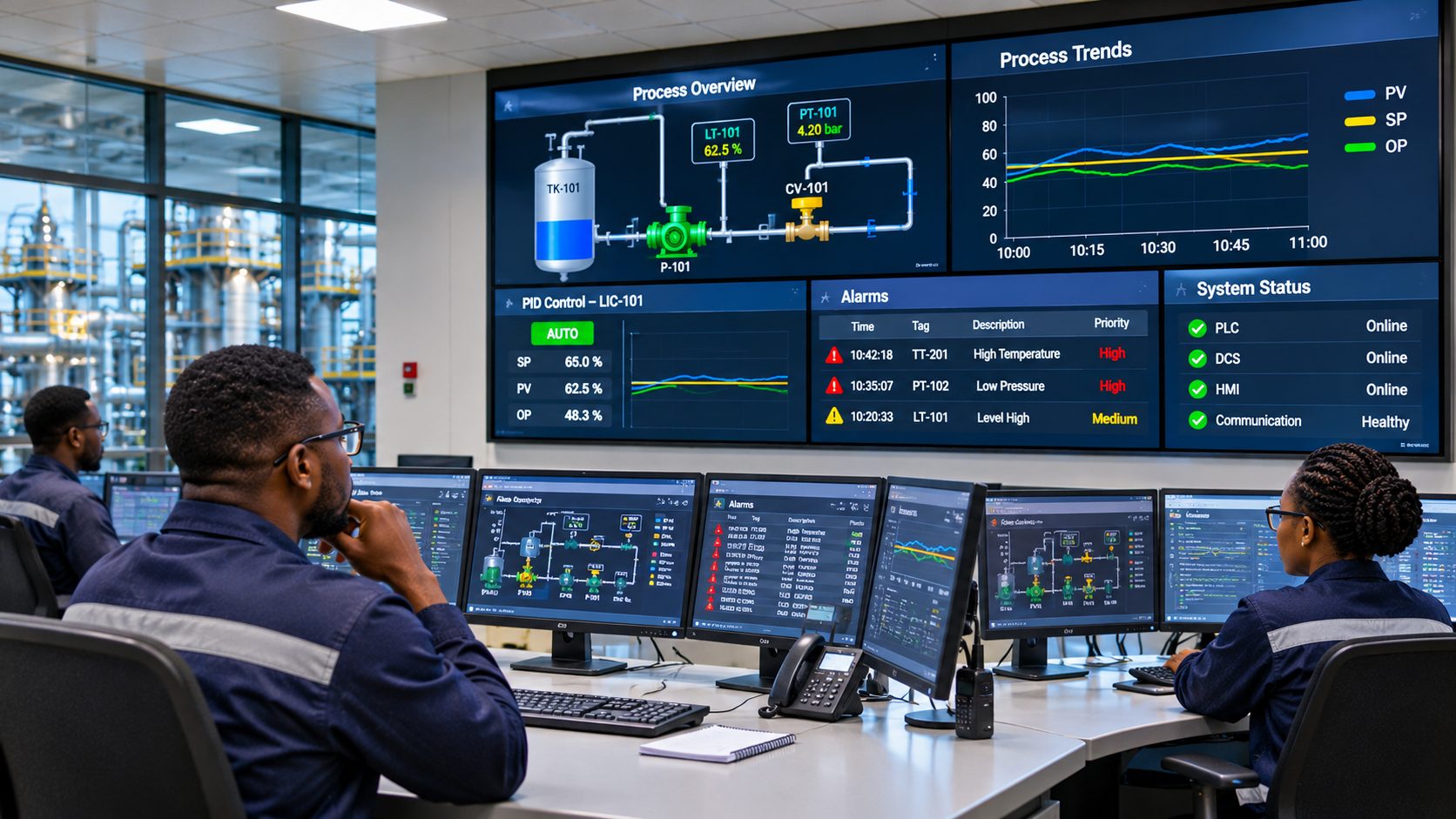
Train your automation, control and instrumentation team on your own plant, without stopping it.
MAT runs private cohorts for operating companies, EPCs and OEMs. Your engineers and technicians learn live from practising engineers, then practise on simulator models built from your P&IDs, so the skills land on your equipment, not a generic example. Graded, reported, and finished in fourteen weeks.
- Staff enrolled
- 18
- Completion
- 94 %
- Practicals graded
- 238
- Avg practical score
- 78 %
Illustrative report. Every corporate cohort gets a live dashboard like this for the training manager.
Our instructors have run control systems at
- NLNG
- DANGOTE
- NESTLÉ
- NIGERIAN BREWERIES
- CHEVRON
- TOTALENERGIES
- LAFARGE
- INDORAMA
Your plant runs on control systems. Your training budget runs on slides.
Most plants in Nigeria have the same gap: experienced automation and instrumentation engineers are retiring or being poached, the graduates replacing them have never tuned a loop or commissioned a panel, and the vendor course everyone gets sent to teaches a product, not the plant. Loops run in manual. Alarms get silenced. Trips get bypassed. The cost shows up as downtime, off-spec product and near misses, never as a line called “training”.
MAT corporate cohorts fix the gap where it lives. Your people learn from engineers who have run plants like yours, then practise on simulator models built from your own P&IDs, so what they learn on Tuesday they can apply on your equipment on Wednesday. Every practical is graded and every grade is reported, so you know exactly who can do what by week fourteen.
Upskill the plant team
Oil and gas, petrochemicals, FMCG, cement, power and water: operators into technicians, technicians into engineers, engineers into leads.
Make graduates billable faster
Fourteen weeks from hire to an engineer who can produce loop sheets, control narratives and PLC logic a client will accept.
Train channel and service engineers
Product knowledge is yours; MAT supplies the plant context, the practice and the grading.
A structured first six months
Enrol your graduate intake in the full six-month programme as a block, with their capstone built on your plant.
Four ways to train a team
| Programme | Length | Team size | What it covers | Best for |
|---|---|---|---|---|
| Private track cohort | 14 weeks | 10–20 | One track (Industrial Automation, Process Control or Instrumentation), five courses, fourteen graded practicals, a track project on your plant model. Foundation compressed to one week for experienced staff. | Plants with a clear skills gap in one discipline |
| Full programme block | 26 weeks | 10–25 | The complete six-month programme for a graduate intake, mixed across tracks, with the capstone built on your plant and judged by your senior engineers alongside ours. | Graduate trainee schemes, EPC intake |
| Short course bundle | 3–9 weeks | 10–20 | One to three courses from the catalogue (for example PID Loop Tuning and Alarm Management), each with its graded practical, scheduled around shifts. | A specific problem to fix this quarter |
| Custom scenario programme | By scope | Any | We model a unit of your plant in the MAT Lab and build practicals around your procedures: start-up, upsets, trips, changeovers. Yours to keep for onboarding and refreshers. | Critical units, high-turnover roles, pre-commissioning |
All programmes are delivered live online, in West Africa Time, with every class recorded. In-person kick-off and clinic days at your site are available in Lagos and Port Harcourt at additional cost.
Send us a P&ID. Get back a plant your team can break safely.
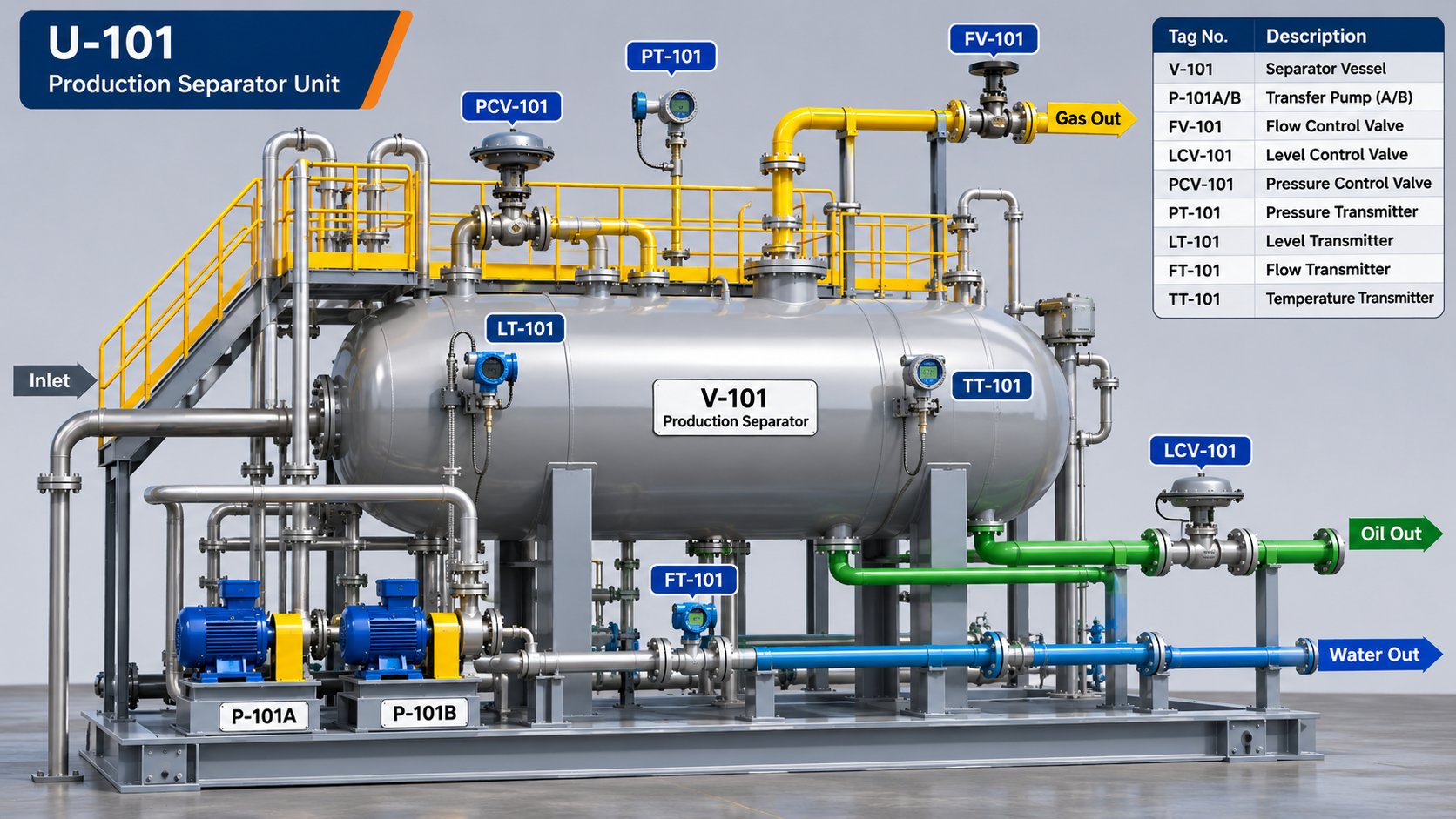
The MAT Lab is powered by Velnode, Madesoft's industrial process simulator, and its models are built, not fixed. Give us the P&ID, the control narrative and the operating envelope for a unit, and we build a live model of it: your tag numbers, your loops, your trips, your alarm limits. Your engineers then practise start-ups, upsets and changeovers on it, with no risk to production and every run logged.
The model stays yours after the cohort ends. Plants use it to onboard new hires, to refresh operators before turnarounds, and to test control changes before they go anywhere near the DCS.
- Built from your P&IDs and narratives
- Typically 3–6 weeks to model one unit
- NDA and data handling as standard
- Yours to keep, with seats for future staff
- 1P&ID and narrative
- 2Model and validate
- 3Practicals written
- 4Cohort runs
Around shifts, with a dashboard for the training manager
Private cohorts follow the same method as the open programme: two live classes a week, a Saturday clinic, a graded practical per module in the MAT Lab, and a lead instructor who knows every participant's work. The differences are scheduling and reporting. We fit the timetable to your roster, and your training manager gets a live view of attendance, submissions and grades, plus a written report at the end.
- Attendance
- 94 %
- Practicals in
- 106 / 112
- Average grade
- 72 %
| Participant | Attended | Last grade | Status |
|---|---|---|---|
| Engineer 01 · Ops | 18 / 18 | 84 % | On track |
| Engineer 02 · Maint. | 17 / 18 | 71 % | On track |
| Technician 03 · I&C | 14 / 18 | 58 % | Clinic booked |
- 1
Scoping call · week 0
We meet your plant or engineering manager, look at who is on the team and what they must be able to do, and recommend a programme. A proposal with timetable and price follows within five working days.
- 2
Baseline assessment · week 1
Every participant does a short practical in the lab before classes start, so we and you know the starting point and can compress or extend Foundation accordingly.
- 3
Delivery · weeks 1–14
Live classes timed to your shift pattern, recorded for anyone on nights. Practicals on your model where one has been built, or on the closest standard model where not. Weekly attendance and grade report to the training manager.
- 4
Track project and review · weeks 12–14
Each participant completes a project on your plant model and defends it to our instructor and one of your senior engineers. We recommend making this the gateway to a role change or a competency sign-off.
- 5
Report and certificates · week 15
A written competency report per participant, MAT track certificates, and continued lab access for refreshers for twelve months.
Measured competence, not attendance certificates
The output of a MAT cohort is evidence: who can tune a loop, who can read a loop sheet, who can bring a unit up from cold, graded by a practising engineer against a rubric your team has seen. It is the difference between “attended training” and “competent to do X”, and it is what your HSE and competency frameworks need.
14
graded practicals per person
each with a data log and rubric score
1
competency report per person
written by the lead instructor
12
months of lab access after
for refreshers and new hires
1
plant model you keep
on custom scenario programmes
Every company plan is built to scope
No two plants train the same people on the same units, so we do not publish a rate card. Tell us who you need to train and what they need to be able to do, and we come back within five working days with a programme, a timetable fitted to your roster and a single price for the whole engagement.
We invoice in naira for Nigerian entities and in US dollars for companies outside Nigeria. ITF-reimbursable where your company qualifies.
Who you are training
Graduate engineers, technicians moving into controls, or an experienced team formalising skills. Cohort size from five to twenty-five.
How deep you go
A single three-week course, one fourteen-week track, or the full six-month programme with a capstone on your plant.
Your own plant in the lab
Optional custom unit models with your tag numbers, built from your P&IDs and yours to keep for refresher training.
Where and when
Fully online around shift rosters, or with on-site days in Lagos or Port Harcourt. Evenings, weekends or block release.
- Practising-engineer lead instructor
- MAT Lab seats for every participant
- Graded practicals and written feedback
- Manager dashboard with attendance and scores
- End-of-programme report per participant
- Verified MAT certificates
Tell us about the team. We reply within five working days.
A proposal includes a recommended programme, a timetable fitted to your roster, the price, and, if you want a custom model, what we need from you to build it. No commitment until you sign.
- Scoping call with the Academic Director
- NDA available before any plant data is shared
- Prefer to talk? Email [email protected]

Questions companies ask
Can the timetable fit a shift roster?
Yes. Live classes are scheduled around your roster, usually two evenings a week, and every class is recorded for anyone on nights. The Saturday clinic can move to a weekday for plant teams.
Do participants need an engineering degree?
No. Technicians and operators with two years on the plant do well; Foundation is extended for them and compressed for experienced engineers, based on the week-one baseline practical.
Is our plant data safe?
We sign an NDA before any P&ID or narrative is shared, store client models in a private workspace visible only to your cohort, and delete or hand over data at the end as you prefer.
Can you deliver in person?
Kick-off days, clinics and the final review can be run at your site in Lagos or Port Harcourt at additional cost. Delivery elsewhere is quoted case by case.
Do you train on our specific PLC or DCS?
Practicals use the MAT Lab and free vendor tools. Where you need vendor-specific depth on Siemens, Rockwell, Emerson, Yokogawa or Honeywell, we bring a guest expert and use your own engineering workstation licences.
Can we pay through ITF?
Our programmes are structured to meet Industrial Training Fund reimbursement requirements for qualifying Nigerian companies. We provide the documentation; approval is yours to obtain.
What does the end-of-cohort report contain?
Per participant: attendance, each practical score against the rubric, the track project grade and reviewer notes, and a competency statement from the lead instructor. Per cohort: a summary your competency framework can reference.
Train the team on your own plant
Private cohorts of 10–20, fourteen weeks, measured competence at the end.