
• PC-04
  • Process Control · course 4 of 5
  • Graded practical

Introduction to Advanced Control

Two weeks on where model predictive control earns its cost, and how to tell when PID is enough.

weeks
2
live classes
4
graded practical
1
start any time
On demand
Outcomes

What you'll learn

  • Explain what MPC does that a set of PID loops cannot
  • Recognise interaction between loops and measure it
  • Set up a simple MPC on a column model and compare it to PID
  • Estimate the benefit of APC in money, not adjectives
  • Know when APC is the wrong answer
  • Talk to an APC vendor without being sold to
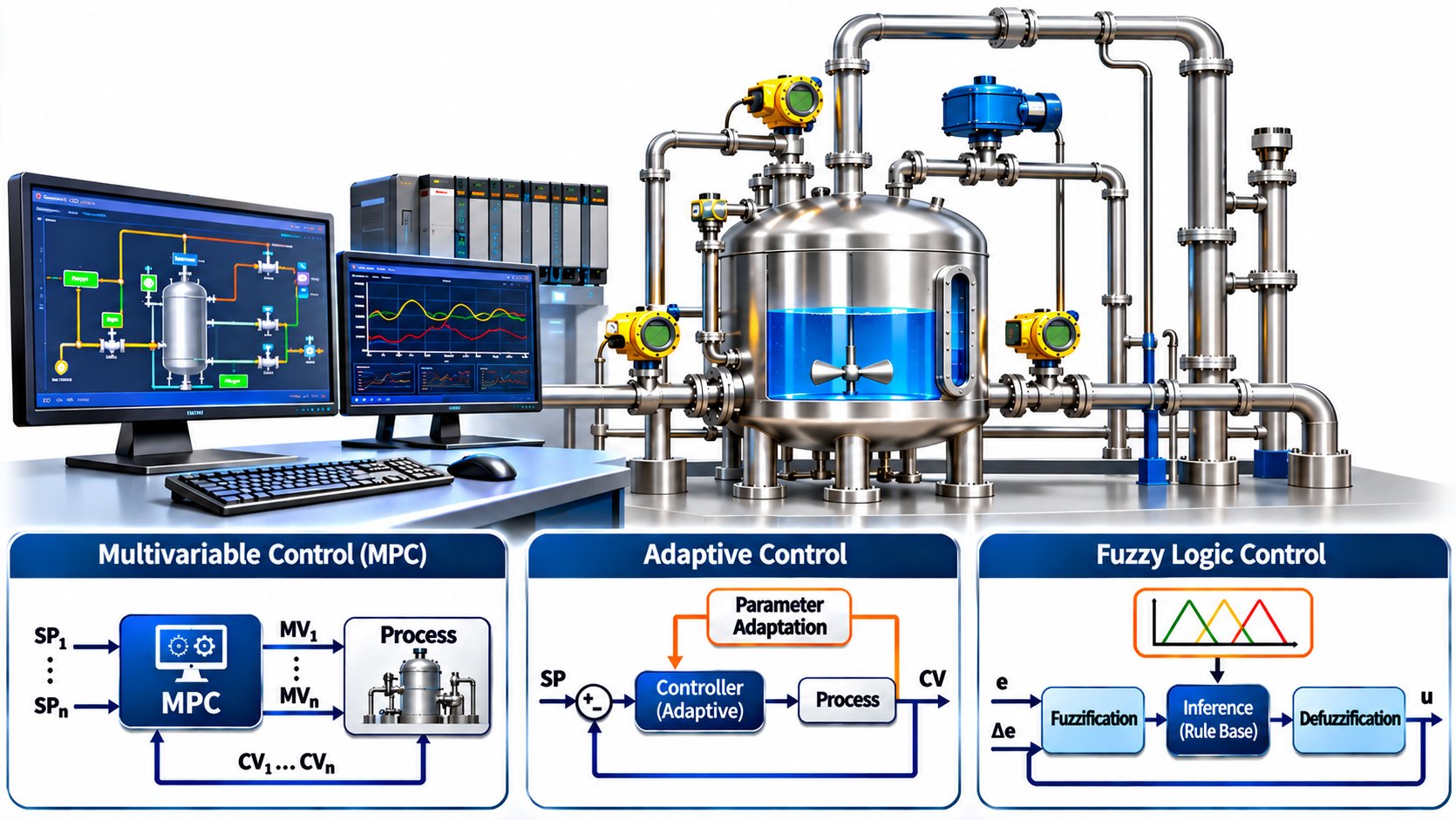
Advanced control: a DCS workstation beside a reactor skid, with block diagrams for model predictive, adaptive and fuzzy logic control
Course data sheet
Code
PC-04
Track
Process Control, weeks 14–15
Level
Advanced
Prerequisite
Cascade, Ratio and Feedforward, or equivalent experience
Starts
On demand · begin the week you enrol
Live classes
Tue and Thu 19:00–21:00 WAT, 4 sessions
Clinic
Sat 10:00–12:00, 2 sessions
Assessment
1 graded practical, 2 quizzes
You need
A laptop, Chrome, about six hours a week
Why advanced control

APC projects cost millions and half of them are switched off within a year. Someone on site has to understand them.

Model predictive control runs most refineries and large chemical plants, and vendors sell it hard. Plants that have an engineer who understands what the controller is doing keep it running and bank the benefit; plants that do not switch it off the first time it does something the operator did not expect. This course makes you that engineer, at the level a site needs, in two weeks.

You see interaction between loops on a column model in the MAT Lab, set up a small MPC against it, run both PID and MPC through the same upsets and compare them on throughput, purity and energy. A process control engineer grades your comparison and your benefit estimate.

Hands-on
6 hours in the lab over two weeks
Graded by
A process control engineer with APC project experience
You keep
A PID-versus-MPC comparison with a benefit estimate
Counts toward
The Process Control track and ISA CAP prep
Syllabus

Four sessions, two weeks

  • 12-min pre-class video
  • Live class
  • Quiz
S1When PID runs out

Interaction, constraints, many variables, slow economics; the relative gain array in one session.

S2What MPC does

Models, predictions, moves, constraints and the objective; the controller explained with a trend, not a matrix.

S3Setting one up

A small MPC on the column model: variables, models from step tests, tuning weights, running it live.

S4Benefits clinic and practical review Practical due

Comparing PID and MPC on the same upsets; estimating the benefit; practical submission due.

C-201 · COLUMN · PID vs MPCMPC ACTIVE · 3 CVs AT LIMIT
Purity σ
0.08 %
Throughput
+3.1 %
Reboiler duty
−2.4 %
Graded practical

Compare PID and MPC on a column.

In the MAT Lab you run a distillation column under a feed-composition upset first with well-tuned PID loops, then with a small MPC you have set up yourself, and compare purity variation, throughput and energy. Your instructor grades the setup, the comparison and your benefit estimate; it goes on your portfolio.

How the practical runs

From interacting loops to a costed comparison, in five steps

You are given a column, a set of upsets and a rubric. Then you answer the question the plant manager will ask: is it worth it?

  1. 1

    Baseline

    Run the column on PID through the standard upset set; log purity, throughput, energy.

  2. 2

    Find the interaction

    Step each manipulated variable; see what moves that should not.

  3. 3

    Build the MPC

    Models from the step tests, constraints, weights; run it.

  4. 4

    Same upsets, MPC

    Repeat the baseline with MPC; log the same numbers.

  5. 5

    Estimate the benefit

    Convert the difference to naira per year; defended at the Saturday clinic.

Who this course is for

Engineers and technicians who are tired of guessing

Control engineers moving toward APC or DCS roles. Process engineers who get asked to evaluate vendor proposals. Anyone who has seen "APC" on a job advert and wants to know what it means.

What you walk away with

Skills you can use on Monday, and proof you have them

A working understanding of MPC that lets you support, evaluate or specify it. A costed PID-versus-MPC study on your public portfolio. A certificate of completion with a verification code. Credit toward the full Process Control track.

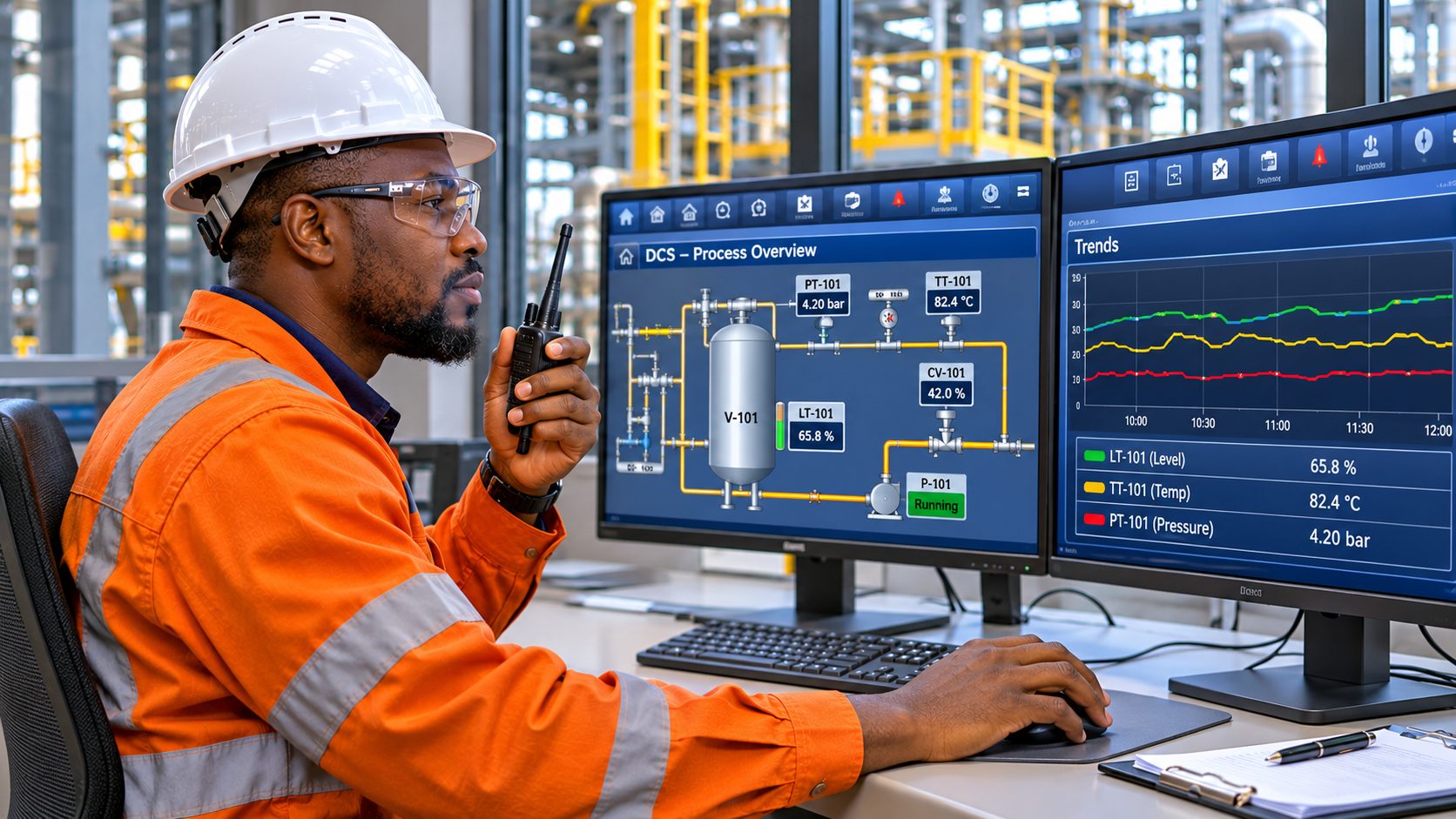
Process control engineer at a DCS console with the process overview and live loop trends on screen
Your instructor

A practising control engineer who tunes loops for a living

Lead instructor · Process Control track

8+ years on live plants · currently in industry · grades every practical personally

This course is taught by the Process Control lead for your cohort, a practising engineer who does this work on real plants and grades every practical personally. Faculty rotates by cohort, so you meet your instructor on the orientation call.

Track

Course 4 of 5 in Process Control

Courses in the Process Control track
CodeCourseWeeksPriceLink
PC-01 Process Dynamics Weeks 5–7 ₦150,000 View Process Dynamics
PC-02 PID Loop Tuning Weeks 8–10 ₦150,000 View PID Loop Tuning
PC-03 Cascade, Ratio and Feedforward Weeks 11–13 ₦150,000 View Cascade, Ratio and Feedforward
PC-04 Introduction to Advanced Control Weeks 14–15 ₦150,000 This course
PC-05 Control Strategy Design from P&IDs Weeks 16–18 ₦150,000 View Control Strategy Design from P&IDs

Take all five and you've completed the track. Already done three? Upgrade to the full track (₦700,000) for the difference.

See the full track
FAQ

Questions

Is this a full APC course?

No. It is an introduction at the level a site engineer needs: what MPC does, how to set up a small one, and how to judge the benefit. Full APC engineering is a specialist path.

How much maths is there?

Less than you fear. Models are fitted by tool and the controller is explained with trends. Matrices appear once, for those who want them.

Does this count toward the track?

Yes. It is course 4 of 5 in Process Control. Finish three courses and you can upgrade to the full track for the difference.

What do I get at the end?

A certificate of completion with a verification code, and your graded practical on your public portfolio.

Introduction to Advanced Control · on demand

₦150,000 · two weeks · one graded practical

Enrol

Cohort 1 starts 15 January 2027

75 places across three tracks. Applications close when the cohort fills.