

• IN-03
  • Instrumentation · course 3 of 5
  • Graded practical

Control Valves and Final Elements

Three weeks on the half of the loop everyone forgets: sizing, characteristics, actuators, positioners and fail positions.

weeks
3
live classes
6
graded practical
1
start any time
On demand
Outcomes

What you'll learn

  • Size a control valve for a service and check it across the operating range
  • Choose a characteristic and explain installed versus inherent
  • Select an actuator and fail position from the process hazard
  • Set up a positioner and verify the stroke
  • Diagnose stiction, hysteresis and oversizing from the loop trend
  • Specify a valve a buyer can order and a plant can maintain
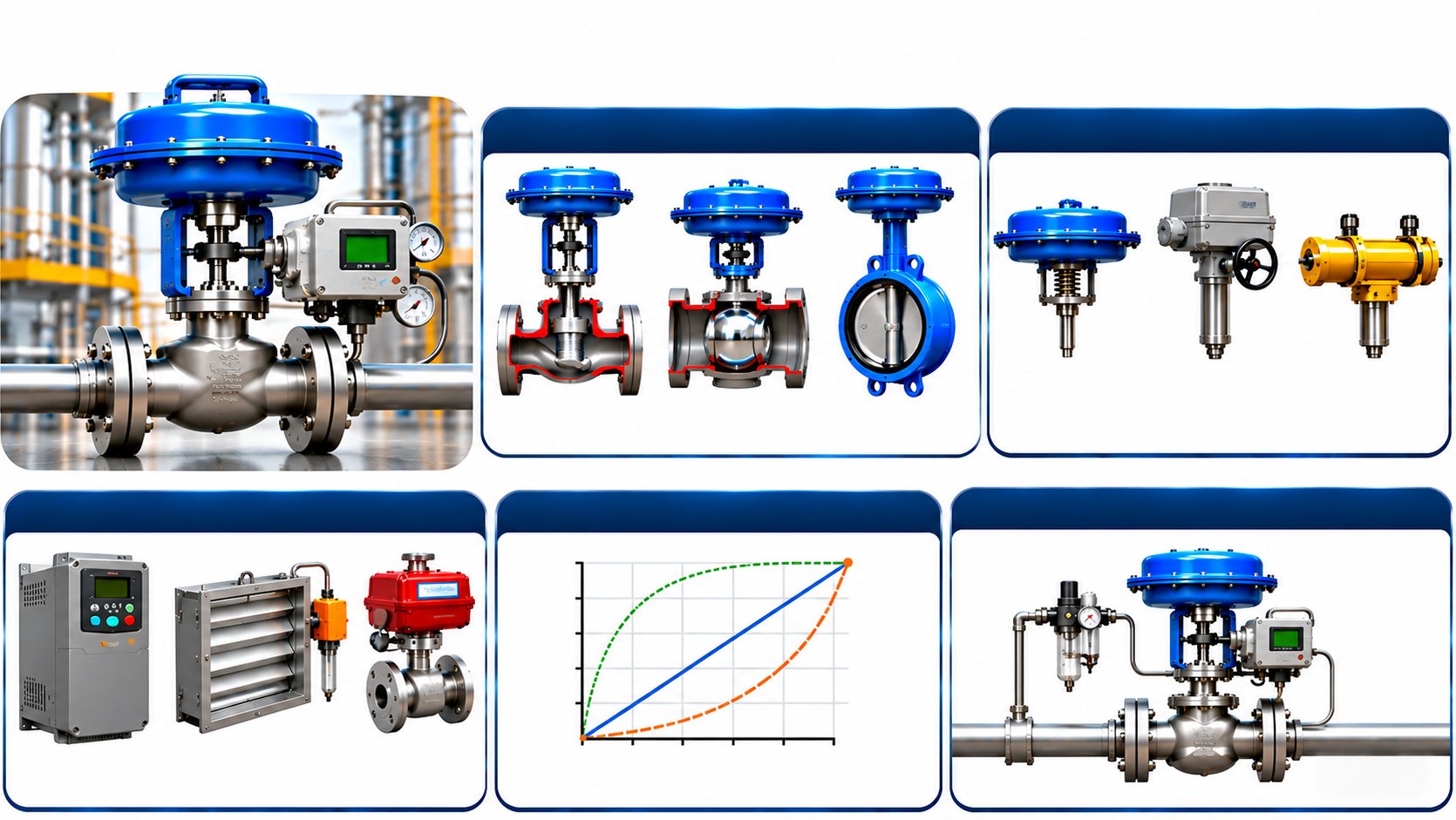
Control valves and final elements: globe, ball and butterfly valve bodies, pneumatic, electric and hydraulic actuators, flow characteristic curves and a valve with positioner installed on a line
Course data sheet
Code
IN-03
Track
Instrumentation, weeks 11–13
Level
Core
Prerequisite
Measurement Principles, or technician experience
Starts
On demand · begin the week you enrol
Live classes
Tue and Thu 19:00–21:00 WAT, 6 sessions
Clinic
Sat 10:00–12:00, 3 sessions
Assessment
1 graded practical, 2 quizzes
You need
A laptop, Chrome, about six hours a week
Why control valves

The best tuning in the world cannot fix an oversized valve. Half of "controller problems" are valve problems.

Valves are sized by vendors, selected by price and installed by contractors, and then the control engineer is asked why the loop oscillates. The instrument engineer who can size a valve, choose its characteristic, set its positioner and read stiction off a trend solves problems the rest of the site cannot see, and is the one the plant calls before spending money.

This course is three weeks on the final element. You size a valve for a separator level service, choose its characteristic and actuator, set up its positioner in the MAT Lab, then diagnose the stiction and oversizing we inject. An instrument engineer grades your sizing, your selection and your diagnosis.

Hands-on
9 hours in the lab over three weeks
Graded by
An instrument engineer who specifies valves for live plants
You keep
A valve sizing and selection package on your portfolio
Counts toward
The Instrumentation track and ISA CCST prep
Syllabus

Six sessions, three weeks

  • 12-min pre-class video
  • Live class
  • Quiz
S1How a control valve works

Bodies, trims, globe, ball, butterfly; flow coefficient; where the pressure drop goes.

S2Sizing

Cv across the range, choked flow, cavitation and flashing, noise; using a sizing tool critically.

S3Characteristics

Linear, equal percentage, quick opening; inherent versus installed; matching the process.

S4Actuators and fail positions

Pneumatic, electric, hydraulic; bench range; fail open, closed or last; deriving the fail position from the hazard.

S5Positioners and diagnostics

Smart positioners, stroke tests, signatures; stiction, hysteresis and deadband on the trend.

S6Valve clinic and practical review Practical due

Your selection challenged against the service; practical submission due.

LV-101 · SEPARATOR LEVEL · VALVESTROKE TEST PASS · STICTION 0.4 %
Cv required
38 – 142
Characteristic
Eq. %
Fail position
Open
Graded practical

Size and set up the level control valve.

In the MAT Lab you size the oil-level control valve on a three-phase separator across its operating range, choose the body, characteristic, actuator and fail position, set up the positioner and run a stroke test, then diagnose the stiction and oversizing we inject into the loop. Your instructor grades the sizing, the selection and your diagnosis; it goes on your portfolio.

How the practical runs

From process data to a valve that controls, in five steps

You are given a separator level service, process data and a rubric. Then you do what the vendor would do, and check it.

  1. 1

    Define the service

    Flows, pressures, fluid, operating range from the process data.

  2. 2

    Size it

    Cv at minimum, normal and maximum; check choking and cavitation.

  3. 3

    Select

    Body, trim, characteristic, actuator and fail position with reasons.

  4. 4

    Set it up

    Positioner configuration, bench range, stroke test and signature.

  5. 5

    Diagnose

    Stiction and oversizing injected; find them on the trend; defended at the Saturday clinic.

Who this course is for

Engineers and technicians who are tired of guessing

Instrument engineers and technicians who inherit valves they did not choose. Control engineers who tune loops and want to know when the valve is the problem. Process engineers who specify valves and want to stop oversizing them.

What you walk away with

Skills you can use on Monday, and proof you have them

The ability to size, select and diagnose control valves. A valve package on your public portfolio. A certificate of completion with a verification code. Credit toward the full Instrumentation track, where the next course documents the whole loop.

MAT lead instructor checking a pressure transmitter in the field with a calibrator reading 4.000 mA
Your instructor

A practising instrument engineer who calibrates and commissions for a living

Lead instructor · Instrumentation track

8+ years on live plants · currently in industry · grades every practical personally

This course is taught by the Instrumentation lead for your cohort, a practising engineer who does this work on real plants and grades every practical personally. Faculty rotates by cohort, so you meet your instructor on the orientation call.

Track

Course 3 of 5 in Instrumentation

Courses in the Instrumentation track
CodeCourseWeeksPriceLink
IN-01 Measurement Principles Weeks 5–7 ₦150,000 View Measurement Principles
IN-02 Transmitter Selection and Calibration Weeks 8–10 ₦150,000 View Transmitter Selection and Calibration
IN-03 Control Valves and Final Elements Weeks 11–13 ₦150,000 This course
IN-04 Loop Documentation to ISA 5.1 Weeks 14–15 ₦150,000 View Loop Documentation to ISA 5.1
IN-05 Hazardous Areas and Installation Weeks 16–18 ₦150,000 View Hazardous Areas and Installation

Take all five and you've completed the track. Already done three? Upgrade to the full track (₦700,000) for the difference.

See the full track
FAQ

Questions

Do I need a sizing tool?

We use a free vendor sizing tool and teach you to check it by hand; the lab supplies the process data.

Can I do this course if I am not in Nigeria?

Yes. Classes are 19:00–21:00 West Africa Time; recordings are up within the hour, and you pay in dollars by card.

Does this count toward the track?

Yes. It is course 3 of 5 in Instrumentation. Finish three courses and you can upgrade to the full track for the difference.

What do I get at the end?

A certificate of completion with a verification code, and your graded practical on your public portfolio.

Control Valves and Final Elements · on demand

₦150,000 · three weeks · one graded practical

Enrol

Cohort 1 starts 15 January 2027

75 places across three tracks. Applications close when the cohort fills.