

• IN-05
  • Instrumentation · course 5 of 5
  • Graded practical

Hazardous Areas and Installation

Three weeks on zones, Ex protection, intrinsically safe loops and the installation and inspection checks that keep a plant from exploding.

weeks
3
live classes
6
graded practical
1
start any time
On demand
Outcomes

What you'll learn

  • Read an area classification drawing and know what it means for every instrument
  • Explain the Ex protection concepts and choose one for a location
  • Design an intrinsically safe loop with barrier, cable and entity parameters
  • Install glands, cables and enclosures to the standard
  • Carry out initial and periodic inspections and record them
  • Close out a punch list so a plant can start safely
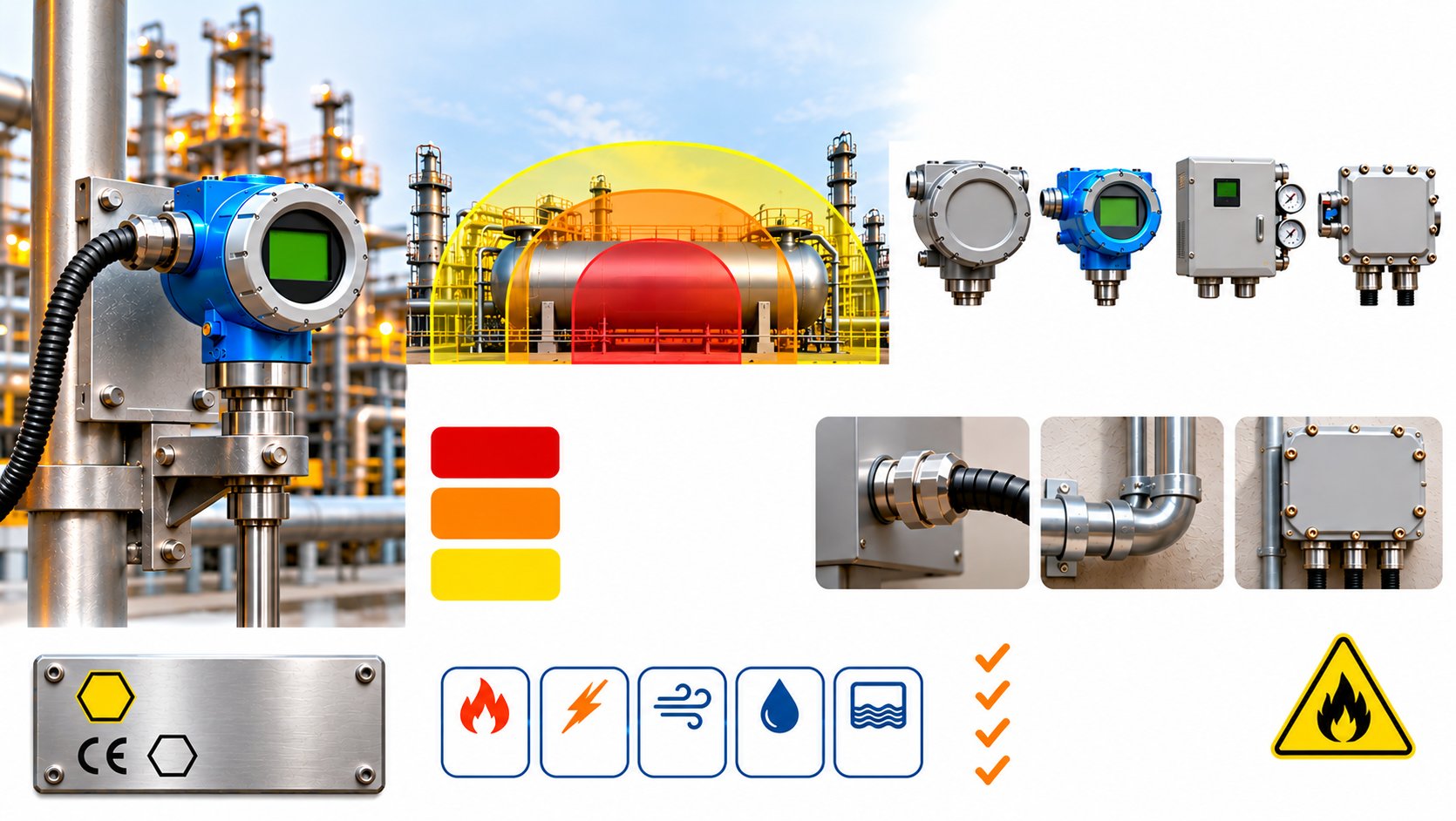
Hazardous areas and installation: an Ex-rated transmitter on a pipe stand, zone classification around a separator, flameproof enclosures, cable glands and conduit, and an Ex marking plate
Course data sheet
Code
IN-05
Track
Instrumentation, weeks 16–18
Level
Advanced
Prerequisite
Transmitter Selection and Calibration, or technician experience
Starts
On demand · begin the week you enrol
Live classes
Tue and Thu 19:00–21:00 WAT, 6 sessions
Clinic
Sat 10:00–12:00, 3 sessions
Assessment
1 graded practical, 2 quizzes
You need
A laptop, Chrome, about six hours a week
Why hazardous areas

In a gas plant, a wrong gland is a possible ignition source. This is the course that keeps people alive.

Oil and gas, petrochemicals and many FMCG plants have classified areas, and every instrument in them must be selected, installed and inspected to a standard. Most instrument faults in Nigerian plants found during audits are installation faults: wrong glands, unsealed entries, IS loops with the wrong barrier. The engineer who can design, install and inspect hazardous-area instrumentation is required by law on these sites and is paid accordingly.

This course is three weeks on the standards and the practice. You classify a separator area, choose protection concepts, design an IS loop with entity parameters, install it in the MAT Lab with the glands and enclosures right, inspect it and close out the punch list. An instrument engineer grades the design, the installation and the inspection record.

Hands-on
10 hours in the lab over three weeks
Graded by
An instrument engineer with hazardous-area inspection experience
You keep
An IS loop design and inspection record on your portfolio
Counts toward
The Instrumentation track and preparation for CompEx-style certification
Syllabus

Six sessions, three weeks

  • 12-min pre-class video
  • Live class
  • Quiz
S1Explosions and classification

Flammable atmospheres, ignition sources, zones 0, 1 and 2; reading an area classification drawing.

S2Ex protection concepts

Ex d, Ex e, Ex i, Ex n, Ex p; markings, temperature classes, gas groups; choosing a concept for a location.

S3Intrinsic safety

Barriers and isolators, entity parameters, cable capacitance and inductance; designing a loop that is actually safe.

S4Installation

Glands, cables, enclosures, earthing and bonding; the common mistakes and the standard that forbids them.

S5Inspection and documentation

Initial, periodic and sample inspections; the checklist; punch lists and close-out.

S6Inspection clinic and practical review Practical due

Your installation inspected by your classmates against the checklist; practical submission due.

V-101 · ZONE 1 · IS LOOP LT-102INSPECTION PASS · 0 OPEN ITEMS
Protection
Ex ia IIC T4
Entity check
Pass
Punch items
4 closed
Graded practical

Install and check an IS loop.

In the MAT Lab you classify the area around a three-phase separator, choose the protection concept for each instrument, design the intrinsically safe loop for the level transmitter with barrier and cable parameters, install it with the right glands and enclosures, inspect it to the checklist and close out the punch list. Your instructor grades the design, the installation and the inspection record; it goes on your portfolio.

How the practical runs

From an area drawing to a passed inspection, in five steps

You are given a separator in a classified area, a set of instruments and a rubric. Then you do what the site cannot start up without.

  1. 1

    Classify

    Zones around the separator from the drawing and the process.

  2. 2

    Select

    A protection concept and marking for every instrument in the area.

  3. 3

    Design the IS loop

    Barrier, entity parameters, cable limits; the calculation written down.

  4. 4

    Install it

    Glands, cable, enclosure, earthing in the lab's virtual installation.

  5. 5

    Inspect and close out

    Checklist inspection, punch list, close-out; defended at the Saturday clinic.

Who this course is for

Engineers and technicians who are tired of guessing

Instrument engineers and technicians on oil, gas and chemical sites. Electrical engineers who sign off Ex installations. Anyone preparing for a CompEx-style certification who wants the understanding before the exam.

What you walk away with

Skills you can use on Monday, and proof you have them

The knowledge to design, install and inspect hazardous-area instrumentation. An IS loop design and inspection record on your public portfolio. A certificate of completion with a verification code. Completion of the Instrumentation track if you have done the other four courses.

MAT lead instructor checking a pressure transmitter in the field with a calibrator reading 4.000 mA
Your instructor

A practising instrument engineer who calibrates and commissions for a living

Lead instructor · Instrumentation track

8+ years on live plants · currently in industry · grades every practical personally

This course is taught by the Instrumentation lead for your cohort, a practising engineer who does this work on real plants and grades every practical personally. Faculty rotates by cohort, so you meet your instructor on the orientation call.

Track

Course 5 of 5 in Instrumentation

Courses in the Instrumentation track
CodeCourseWeeksPriceLink
IN-01 Measurement Principles Weeks 5–7 ₦150,000 View Measurement Principles
IN-02 Transmitter Selection and Calibration Weeks 8–10 ₦150,000 View Transmitter Selection and Calibration
IN-03 Control Valves and Final Elements Weeks 11–13 ₦150,000 View Control Valves and Final Elements
IN-04 Loop Documentation to ISA 5.1 Weeks 14–15 ₦150,000 View Loop Documentation to ISA 5.1
IN-05 Hazardous Areas and Installation Weeks 16–18 ₦150,000 This course

Take all five and you've completed the track. Already done three? Upgrade to the full track (₦700,000) for the difference.

See the full track
FAQ

Questions

Is this a CompEx certification?

No. It prepares you for one, and sponsored students often sit the certification afterwards. The course gives you the understanding the exam assumes.

Is there any physical installation work?

All practicals run in the MAT Lab, which models the glands, enclosures and inspection. Companies that sponsor students can arrange site time separately.

Does this count toward the track?

Yes. It is course 5 of 5 in Instrumentation. Finish three courses and you can upgrade to the full track for the difference.

What do I get at the end?

A certificate of completion with a verification code, and your graded practical on your public portfolio.

Hazardous Areas and Installation · on demand

₦150,000 · three weeks · one graded practical

Enrol

Cohort 1 starts 15 January 2027

75 places across three tracks. Applications close when the cohort fills.